Fatigue isn’t just “being tired” — it’s now a compliance expectation
Originally published in Cotton Matters (Cotton Australia). Adapted for a broader agribusiness audience.
Fatigue isn’t new on farms.
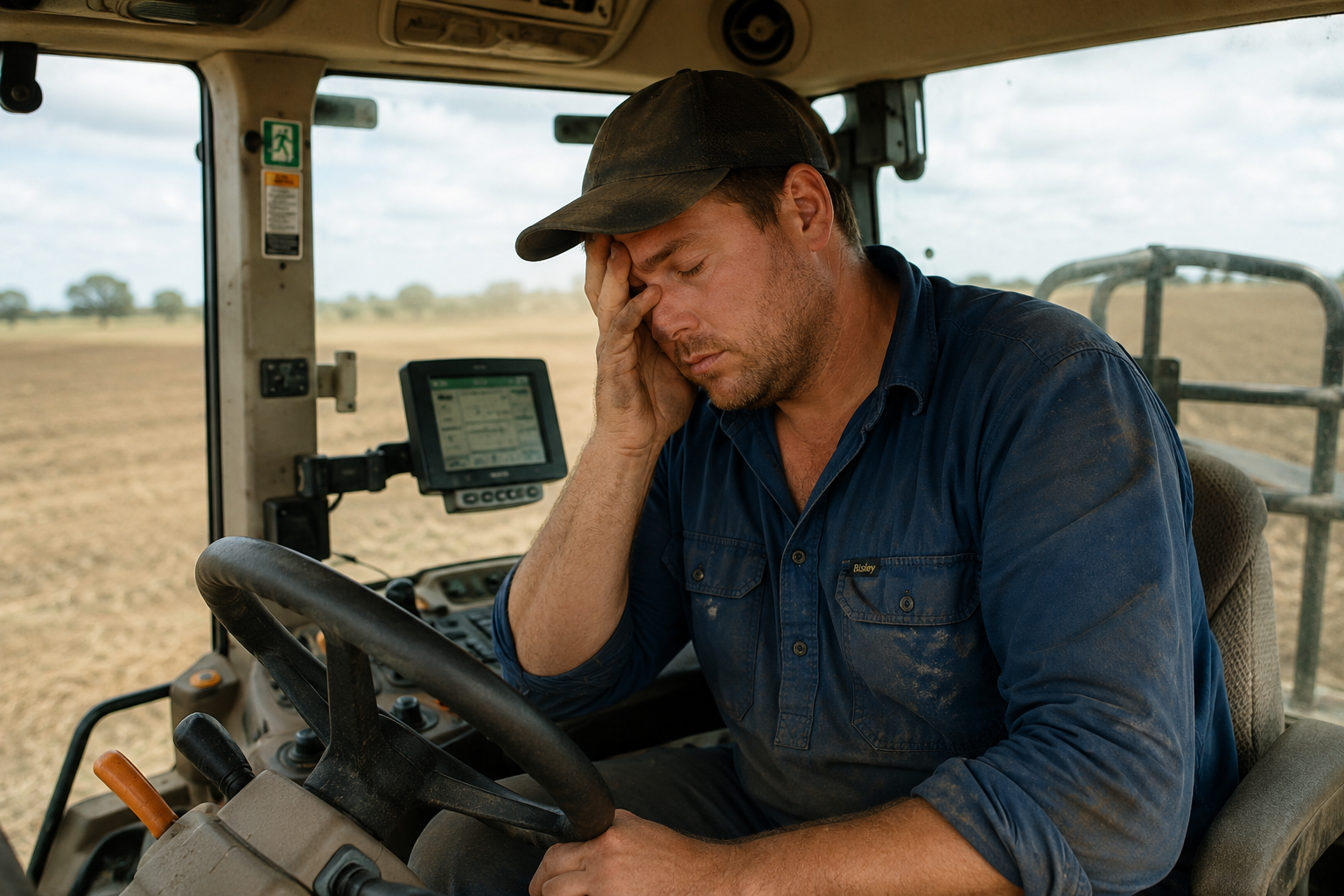
Everyone knows what it looks like when people are running on big days, long weeks and not enough sleep. You feel it in the cab. You see it in small mistakes. You hear it in shorter tempers.
It’s part of why agriculture remains one of the highest-risk industries.
And when regulators start talking about new Codes of Practice, it can feel like more red tape from outside the industry telling you how to run your business. That reaction is understandable.
But what’s shifting now isn’t the idea that fatigue is dangerous — it’s the expectation around it.
Fatigue is now being treated like any other hazard
From 1 July 2026, NSW has adopted a new Code of Practice for managing fatigue at work.
In practical terms, this means one thing:
If something goes wrong, you may be asked a simple question:
Can you show what you did to manage fatigue?
A Code of Practice doesn’t replace the WHS Act, but it sets a clear benchmark for what SafeWork considers “reasonably practicable”.
If you’re not following the Code, you need to be able to demonstrate that what you’re doing manages fatigue just as effectively.
Fatigue is broader than what most people think
Fatigue isn’t just physical tiredness.
It can be:
Physical — your body is spent
Mental — reduced focus, slower decisions
Emotional — irritable, stressed, running on empty
And it directly impacts decision-making around:
Vehicles
Machinery
High-risk tasks
Which is where things start to go wrong.
Where fatigue shows up on farm
Fatigue risk often builds from everyday conditions, especially during busy periods.
Common triggers include:
Long shifts and multiple big days in a row
Short turnarounds between shifts
Heat, dehydration and poor nutrition
Long drives, including late-night travel
Working without enough support or supervision
New or seasonal workers who may not fully understand instructions
Distraction and reduced attention (including phone use around machinery)
Long periods of monotonous work reducing alertness
If these are present, fatigue is present — whether it’s acknowledged or not.
Simple controls that work in practice
Managing fatigue doesn’t need to be complicated.
It comes down to putting practical controls in place and backing them in.
This might include:
Setting maximum shift lengths during peak periods
Building in non-negotiable breaks
Allowing adequate time between shifts
Rotating higher-risk tasks
Providing clear supervision for new or inexperienced workers
Using simple inductions and check-backs to confirm understanding
Setting expectations around phone use near vehicles and machinery
Making water and proper meals accessible
Establishing clear “stop rules” when someone isn’t fit to work
Just as important is the culture around it.
People need to feel comfortable saying:
“I’m buggered”
Without being dismissed or pushed to keep going.
If they don’t, they’ll push through — and that’s when mistakes happen.
If you can’t show it, it’s hard to defend
It doesn’t need to be complicated, but it does need to be visible.
Simple records might include:
Start and finish times
Breaks taken
Fatigue-related call-outs and how they were managed
Toolbox discussions during peak periods
A good question to ask is:
If there was a serious incident tomorrow, could you show how fatigue was being managed in the lead-up?
This isn’t just a NSW issue
Even if you’re not operating in NSW, this still matters.
Expectations around fatigue are tightening across all states. The detail may differ, but the direction is the same.
Fatigue is no longer something that sits in the background.
It’s part of the safety conversation — and part of what businesses are expected to manage and demonstrate.
Where to start
Start by:
Identifying where fatigue shows up in your business
Putting simple controls in place
Making expectations clear
Keeping basic records
Often, you’re already doing more than you think.
The opportunity is to make it:
More consistent
More visible
Easier to demonstrate
Need a hand getting clarity?
If you’re not sure how fatigue is being managed across your operation — or how to demonstrate it — Ingham & Co can help.
We work alongside farmers to turn safety into something practical, workable and defensible.
👉 Book a free Safety Review (travel costs may apply) and understand where your operation stands.
Ingham & Co – Making farm safety simpler, smarter and fit for the future.